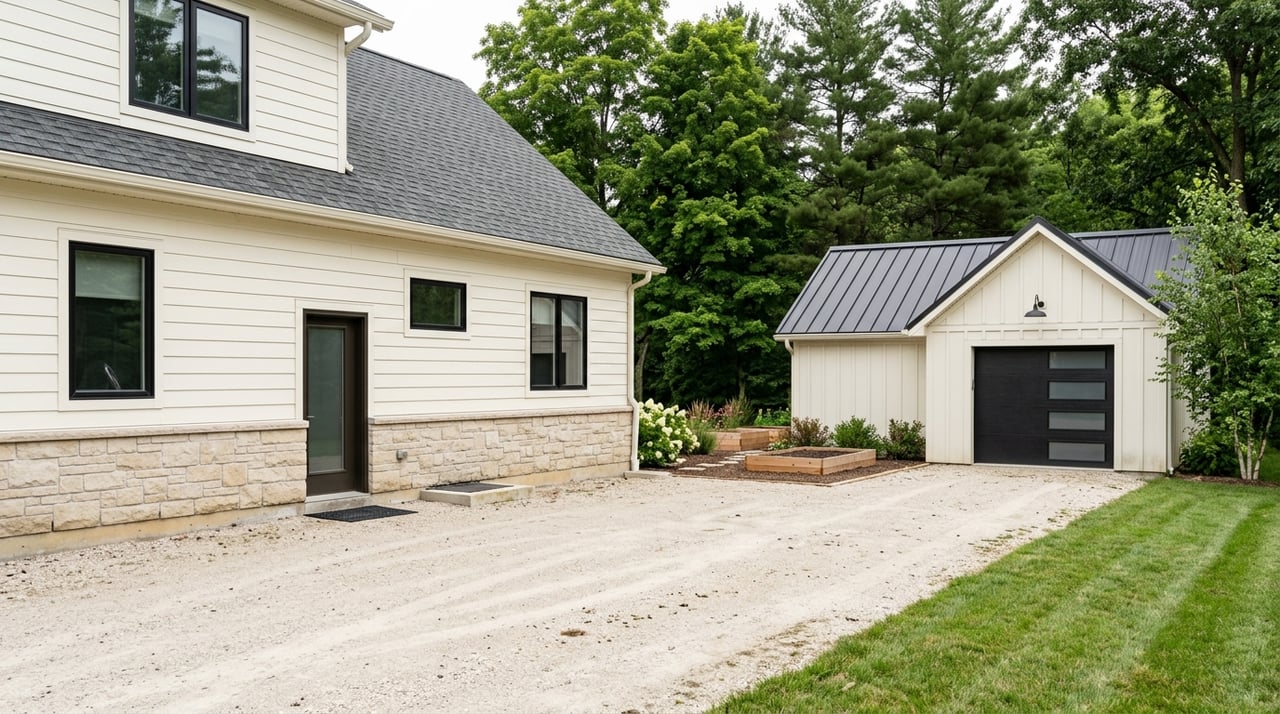
If you want a little land without giving up easy access to Lansing-area amenities, the area around Williamston deserves a close look. Many buyers are drawn to the idea of a home with room for a garden, a pole barn, or simply more space between neighbors, but acreage shopping comes with questions that do not always come up in a typical in-town purchase.
One thing I always remind buyers is that purchasing acreage is about much more than the size of the lot. It's about understanding how you'll actually be able to use the property. Zoning, utilities, outbuildings, future additions, and even driveway access can all affect whether a property truly fits your long-term goals.
If you're still deciding which Greater Lansing community best fits your lifestyle, I also recommend exploring my Greater Lansing Communities guide to compare local cities, neighborhoods, schools, and housing options before narrowing your search.
In this guide, you'll get a practical look at where small-acreage homes tend to show up near Williamston, what zoning can mean for your plans, and which property details matter most before you buy.
Let's dive in.
Why Williamston Acreage Stands Out
Williamston offers a blend that can be hard to find. The city describes itself as a community with farming roots, historic charm, and close proximity to Lansing, which supports the appeal of a semi-rural lifestyle without feeling far removed from everyday conveniences.
That balance also shapes the nearby housing market. Around Williamston, you may find a mix of older farm-town homes, historic properties closer to the city, and newer rural or custom homes on larger lots. For buyers who want breathing room but still need a manageable commute, that mix can be especially appealing.
Many buyers who are considering acreage are also deciding whether they'd prefer to purchase an existing home or build something custom on land that better fits their long-term vision.
Where Small-Acreage Homes Appear
If you are looking for one to five acres, your best opportunities are often just outside the city core. Williamstown Township is a key area to watch because its planning framework aims to preserve open space and farmland while allowing limited low-density residential development.
The township's east side transitions outward from the City of Williamston toward Locke and Leroy Townships. Nearby Wheatfield Township, which sits adjacent to the city's southwest corner, can also be part of your search if you want a more rural setting near Williamston.
Because inventory for small-acreage properties is often limited, I encourage buyers to be patient and prepared. These homes don't always come on the market as frequently as traditional subdivision homes, and the best properties often receive strong interest because they offer something that's increasingly difficult to find—privacy without sacrificing convenience.
Why the City Edge Matters
Small-acreage homes often show up in the transition zone between compact in-town neighborhoods and larger agricultural parcels. That is where you are more likely to see homesites that offer usable outdoor space without requiring the maintenance of a very large farm parcel.
This can be a smart fit if you want flexibility. You may get space for a detached building, gardening, or outdoor recreation while still staying relatively close to services and commuter routes.
Zoning Shapes What You Can Do
When you shop for acreage near Williamston, zoning is one of the first things to understand. Two properties with similar lot sizes can offer very different possibilities depending on the zoning district and whether public sewer is available.
In Williamstown Township, the RR district requires a minimum lot area of 90,000 square feet, while the RE district is intended for lower-density rural estate development that preserves rural character and continued agricultural use. The AG-SF district generally applies to much larger agricultural parcels.
This is one area where my construction background becomes especially valuable. Before a buyer falls in love with a property, I like to help them determine whether the land actually supports what they hope to do with it. Whether that's building a pole barn, adding a detached garage, creating outdoor living space, or eventually constructing a custom home, it's much easier to answer those questions before closing than afterward.
If building a custom home is part of your long-term plan, understanding construction financing before purchasing land can make the entire process much smoother.
Many buyers who are considering acreage are also deciding whether they'd prefer to purchase an existing home or build something custom on land that better fits their long-term vision.
Sewer Availability Can Change the Picture
Public sewer access is a major factor near Williamston. The City of Williamston states that its water and sanitary sewer systems serve the city and portions of nearby townships through service agreements.
Some acreage properties may have utility access, while others rely on private well and septic systems. Development standards can also change depending on whether public sanitary sewer is available.
Outbuildings and Hobby-Use Basics
One reason many buyers want small acreage is the opportunity to create additional outdoor space. Maybe you envision a pole barn, workshop, garden, detached garage, or even hobby-animal use.
Williamstown Township's RR and AG-SF districts provide opportunities for many of these uses, although each district has its own standards and permitted uses.
I've found that buyers are often surprised by how much local ordinances can influence what's possible on a property. Asking those questions early helps prevent disappointment later and ensures the property truly supports your long-term vision.
Accessory Building Rules to Know
Even on rural lots, accessory structures are not a free-for-all. Williamstown Township requires that a principal building already exist before most accessory buildings can be constructed. The ordinance also limits where accessory buildings may be placed and prohibits them from being located within easements or rights-of-way. In residential districts, detached accessory buildings generally cannot be used as dwelling units or rented storage space except under specific permitted circumstances.
One thing I always encourage buyers to think about is not only what they want to build, but when they hope to build it. Understanding the township's requirements before purchasing a property can help you avoid unexpected surprises and ensure the land supports your long-term plans.
Thinking About Animals and Neighbors
If you're considering hobby animals, horses, or similar uses, it's important to understand the local regulations before making an offer.
Williamstown Township's ordinance explains that household animal enclosures and similar uses should be located in a manner that minimizes impacts on neighboring properties. At the same time, certain agricultural activities remain protected under Michigan's Right to Farm Act.
Every property is different, and zoning, acreage, and surrounding land uses all play a role in determining what's appropriate. Taking time to review those details early can help you purchase with confidence.
Open-Space Developments Work Differently
Not every acreage property functions the same way, even if two homes advertise similar lot sizes.
Williamstown Township allows certain open-space preservation developments on larger parcels. These neighborhoods often cluster homes together while preserving significant portions of the property as shared open space.
For buyers, that means it's important to look beyond the acreage listed on paper.
I always encourage buyers to walk the property and think about how they'll actually use the land. Two homes may each advertise three acres, but the amount of usable outdoor space can be very different depending on easements, wetlands, preserved open space, topography, and building setbacks.
Wells and Septic Deserve Extra Attention
Private well and septic systems are among the most important due diligence items when purchasing rural property.
Ingham County Environmental Health performs land evaluations, approves on-site sewage treatment systems, and requires inspections before many property transfers. Inspection reports are reviewed, and the county issues either a conformance or non-conformance notice.
Unlike public utilities, these systems become the homeowner's responsibility, so understanding their condition before closing is essential.
Why This Matters Before You Close
If a well or septic system does not meet county requirements, repairs or escrow arrangements may become part of the transaction. Those issues can affect negotiations, closing timelines, and your overall budget.
This is one of the reasons I enjoy helping buyers with acreage properties. There are simply more moving pieces than with a traditional subdivision purchase. My goal is to help buyers understand those details before they become expensive surprises after closing.
Winter Access Is Part of the Property
Land can be beautiful during every season, but winter access deserves careful consideration.
Long driveways, private roads, snow removal responsibilities, and seasonal road weight restrictions can all influence daily convenience and future construction plans. The Ingham County Road Department oversees road maintenance and seasonal frost-law restrictions that may affect heavy deliveries during certain times of the year.
If you're planning future improvements or construction, these seasonal factors can influence scheduling and project costs.
Questions Worth Asking
Before purchasing a small-acreage property, I recommend asking questions such as:
- How long is the driveway, and who maintains it?
- Is there enough room for service vehicles to turn around?
- How difficult will winter snow removal be?
- If I build later, will seasonal road restrictions affect deliveries?
- Does the property support my future plans for outbuildings or additional improvements?
Sometimes the most practical questions become the most valuable ones after you move in.
How to Shop Smarter Near Williamston
Buying acreage is different than buying a typical subdivision lot.
While price and acreage certainly matter, they're only part of the equation.
I encourage buyers to evaluate:
- Zoning requirements
- Utility availability
- Well and septic condition
- Outbuilding regulations
- Drainage
- Driveway access
- Future building opportunities
- Overall usability of the land
Looking at the property as a whole—not simply the home itself—helps ensure you're making a decision that supports both your current lifestyle and your future goals.
If you're comparing acreage properties with more traditional residential homes, my Looking For A Single-Family Home For Sale In Greater Lansing, MI? guide walks through inspections, evaluating properties, and what buyers should consider before making an offer.
Final Thoughts
One of the things I enjoy most about helping buyers purchase acreage is seeing the possibilities they envision.
Some buyers ultimately decide acreage is the perfect fit, while others discover that an established neighborhood better supports their lifestyle. Understanding both options helps you make a confident long-term decision.
Some dream of building a workshop.
Others want space for gardening, recreation, or simply more privacy.
Whatever your vision may be, the right property should support both your lifestyle today and your plans for tomorrow.
My background in custom home construction allows me to help buyers evaluate much more than the house itself. I enjoy helping clients understand zoning, utilities, future building opportunities, and long-term property potential so they can purchase with confidence.
If you're considering a small-acreage home near Williamston, I'd love the opportunity to help you find a property that fits both your goals and your future.
Continue Exploring Greater Lansing
If you're exploring rural properties or comparing different home-buying options throughout Greater Lansing, these additional guides may help:
- Building Or Buying Your Next Home In St. Johns
- Historic Mason Homes Vs. Newer Subdivisions
- Construction Loan Mortgages In Mid-Michigan
- Looking For A Single-Family Home For Sale In Greater Lansing, MI?
- First-Time Homebuyer's Guide To Buying A Home In Greater Lansing
About The Author
Nicole Giguere is a REALTOR® with Giguere Estates, PLLC and a member of the Seguin-Sprague Team at RE/MAX Real Estate Professionals. Before beginning her real estate career, Nicole spent more than a decade working in custom home construction, giving her a unique understanding of home design, construction quality, land evaluation, and long-term property value.
Today, she helps buyers and sellers throughout Greater Lansing and Mid-Michigan navigate every stage of the real estate process with confidence. Whether you're purchasing your first home, buying acreage, relocating, or building a custom home, Nicole is committed to providing honest guidance, local expertise, and a personalized real estate experience from beginning to end.
If you're ready to BUILD • BUY • SELL in Greater Lansing or Mid-Michigan, Nicole would love the opportunity to help.
Nicole Giguere, REALTOR®
Giguere Estates, PLLC | Seguin-Sprague Team
RE/MAX Real Estate Professionals
📍 1755 Abbey Road, East Lansing, MI 48823
📞 (517) 242-0619
BUILD • BUY • SELL