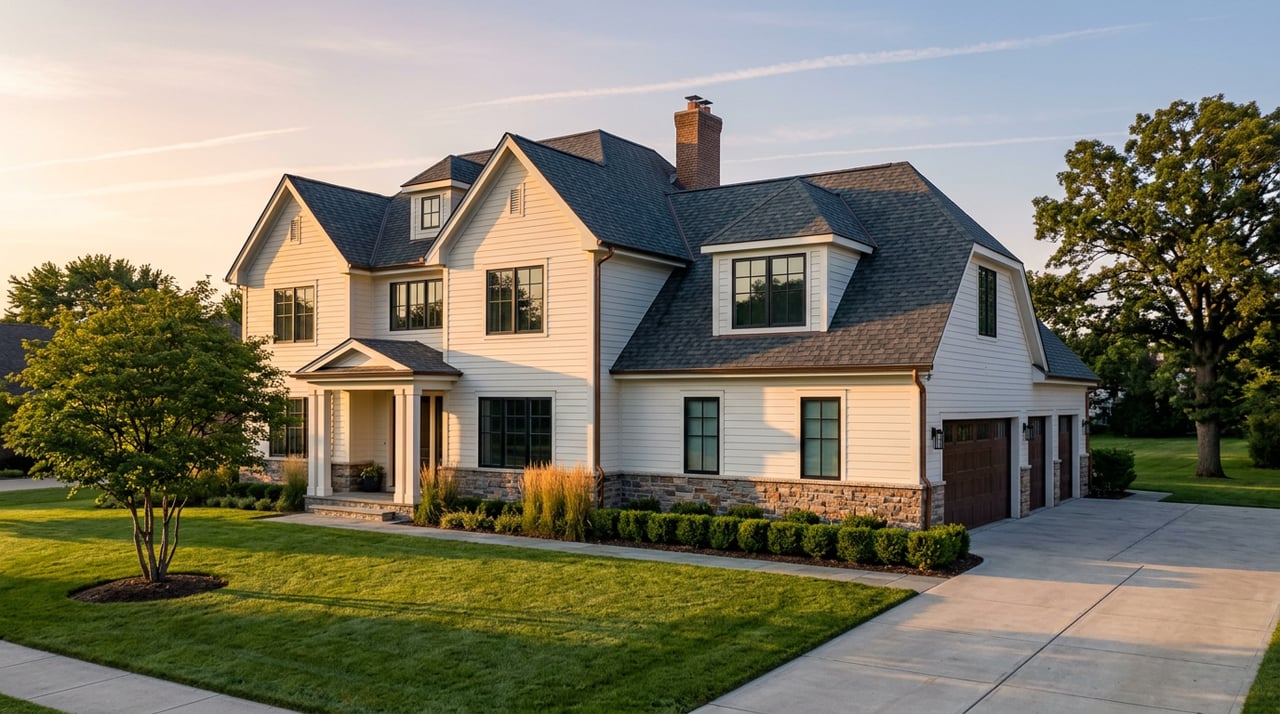
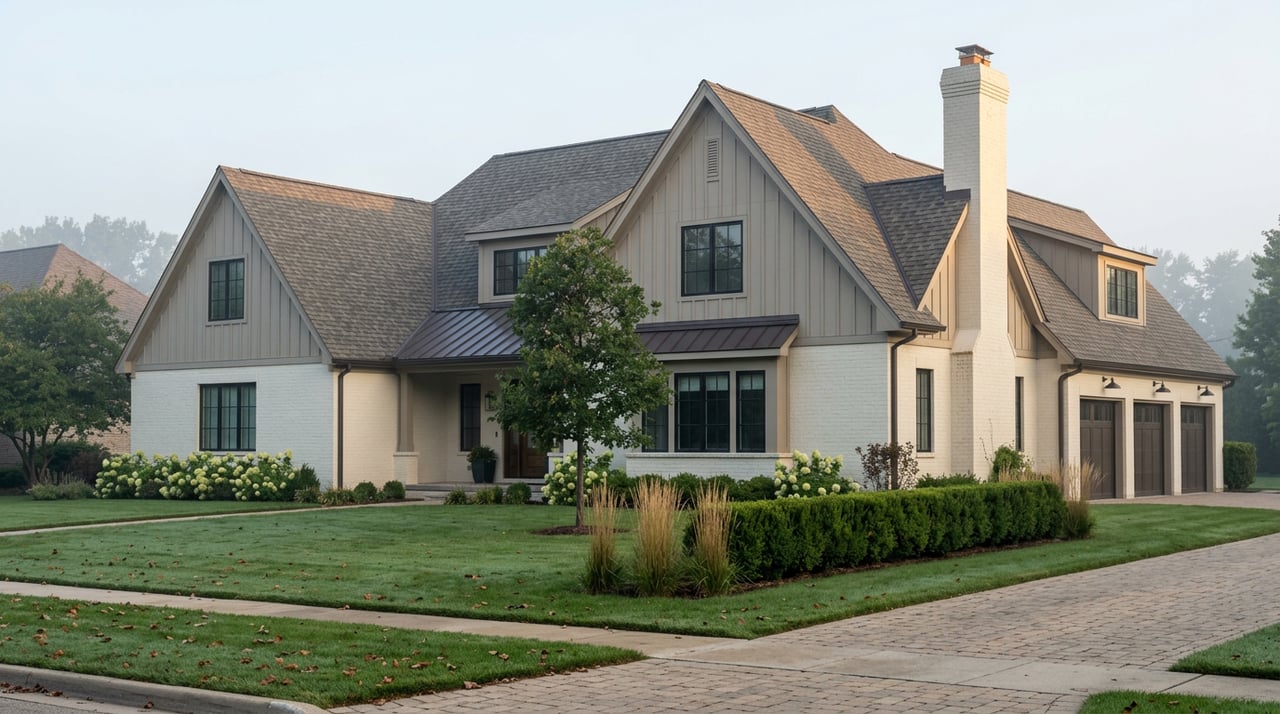
Jeffrey Hank has lived in East Lansing for twenty years, in a house he describes as completely surrounded by rentals in every direction, with a fraternity house two doors down. His parcel sits inside a rental restriction overlay district. The block immediately north of him does not, and it is entirely rentals. Same neighborhood, same zoning intent, opposite outcomes, because a line on a city map was drawn one way and not the other.
That line is the part of East Lansing real estate that never shows up in a listing photo, and it is the reason two houses that look identical from the curb can have completely different futures. One can be converted into a rental if the owner ever wants that flexibility. The other cannot, no matter who owns it or how long they wait. If you are buying in East Lansing, this is worth understanding before you write an offer, not after.
A Zoning Tool Built to Freeze a Neighborhood in Place
East Lansing's Residential Rental Restriction Overlay District ordinance dates to 2004, built as a companion to the older Ordinance 900 from 1997, which already limited single-family homes in R-1 and R-2 zones to owner-occupants or households of no more than two unrelated renters. The overlay ordinance gave residents a way to go further: if two-thirds of property owners in a defined area sign a petition, the city can layer a zoning restriction on top that controls whether any new rental licenses can ever be issued there again.
There are three versions, and the differences matter enormously if you are weighing a house as either a home or an eventual investment.
| Overlay type | Can a new owner get a rental license? | What happens when the property sells |
|---|---|---|
| R-O-1 | No new rental licenses of any kind, including a Class I license for a single roomer | The restriction stays with the parcel permanently |
| R-O-2 | Only the owner who held the property when the overlay was approved can apply for a Class I license | A new buyer loses that eligibility the moment the sale closes |
| R-O-3 | Any owner, current or future, can apply for a Class I license | Eligibility transfers with the deed |
R-O-1 is by far the most common version residents petition for, and it is also the most permanent. Once it is in place, a house cannot be turned into a rental again even if every neighboring parcel already is one, which is precisely Hank's situation. Five of the seven parcels on his stretch of the block have rental licenses that were grandfathered in before the overlay took effect. He cannot join them.
What Half the City Already Looks Like
A map the city published in 2025 showed that roughly half of East Lansing's residential parcels now sit inside one of these overlay districts. That is not a niche zoning quirk affecting a few blocks near a fraternity house. It is a citywide condition, and it means that for about half of the homes for sale in East Lansing at any given time, the rental question is already answered before you tour the property, regardless of what the current owner tells you they think is possible.
The Glencairn neighborhood is the clearest recent example of how this gets decided. Residents there petitioned for an R-O-1 overlay largely to keep short-term rentals like Airbnbs out of the neighborhood, and in April 2024 the City Council voted 4-1 to approve it. The boundary that started at roughly 149 homes grew larger during the process after nearby residents asked to be included, eventually stretching north to Saginaw Street and east to Abbot Road. Every one of those parcels, more than two hundred of them, is now permanently barred from new rental licensing, with the small number of existing rentals grandfathered in to continue operating.
The Red Cedar/Ivanhoe neighborhood took the more moderate R-O-3 route instead, which still allows Class I licenses to transfer with a sale. Bailey and Lantern Hill, both adjacent to campus, are where the mismatch Hank describes shows up most starkly: overlay boundaries drawn years ago that no longer track which blocks are actually rental-heavy today, because the ordinance has no built-in way to redraw itself as a neighborhood changes.
The City Just Declined to Build an Exit Ramp
This spring, a group of homeowners including Hank and a resident named Amy Gload pushed a narrow fix. Gload owns a home in an overlay district but works out of town for stretches and wanted the option to rent it out rather than sell it. The proposed amendment would have let individual parcels opt out of an existing overlay if they met three conditions: the property had to sit on one side of a block facing homes that were not subject to the overlay, it had to be owner-occupied and not currently rented, and it had to be one of no more than two unrented properties on its block. City staff estimated that ten to fifteen homes citywide might actually qualify.
It did not survive contact with the Planning Commission. In a meeting reported in June 2026, commissioners voted unanimously against recommending the amendment, worried that any opt-out, however narrowly written, would set a precedent that eventually unravels the overlays entirely. The measure now moves to City Council without the commission's endorsement, which tells you where the city's institutional weight currently sits on this question: preserving the boundary as drawn, even when the boundary no longer matches the block.
For a buyer, that decision is the whole story in miniature. If you are looking at a house inside an R-O-1 district today, the current policy environment gives you no realistic path to ever changing that status short of a two-thirds petition from your entire district, the same high bar required to create the overlay in the first place.
What This Means for the Offer You Write
None of this shows up in a standard listing sheet, and it will not necessarily come up on a walkthrough. The practical move is to ask before you get attached to a house.
Call the city's Planning, Building and Development Department or the Assessor's Office and ask two questions: is this specific parcel inside a rental restriction overlay, and if so, which type. The city maintains a rental overlay map that staff can walk you through by address. Ask the same question about deed restrictions, which are a separate and older layer of the same problem. Many single-family homes in East Lansing carry deed restrictions that prohibit rental use entirely, independent of anything the overlay ordinance does, and those restrictions do not always show up unless someone specifically checks.
If the home sits in a historic district or a designated heritage neighborhood, add one more step. Any rental license application there also requires a certificate of appropriateness from the historic district commission for exterior changes, on top of the overlay question. And if you are weighing whether to build a rental strategy into your purchase at all, know that even where it is allowed, an initial rental license currently carries a $1,860 fee and a process that typically takes two to four months from application to approval, not something you back into after closing.
None of this is a reason to avoid East Lansing. It is a reason to ask the right question in the right order, because the answer changes what the house can be for you over the next ten or twenty years, not just what it looks like this weekend.
A Few Questions Worth Asking Before You Write an Offer
How do I find out if a specific house is inside an overlay district? Contact the city's Planning, Building and Development Department directly and ask them to check the parcel against the current rental overlay map before you write an offer, not after.
If my block already has several rental licenses, does that mean I can get one too? Not necessarily. Existing licenses on a block are often grandfathered from before an overlay was adopted, while new licenses on that same block can be barred entirely under an R-O-1 designation. Hank's own block proves the point: five neighboring rentals, and no path for a sixth.
Can I petition to have my house removed from an overlay? The standard process to modify an approved overlay requires the same two-thirds petition of parcel owners in the district that created it in the first place. A narrower option for individual parcels was proposed in 2025 and 2026, but the Planning Commission voted against recommending it in June 2026, and it now sits with the City Council without that recommendation.
What if I just want to rent a room to a family member? Family occupancy has always been exempt from rental licensing requirements, regardless of overlay status, so this particular restriction does not affect that situation.
Buying in East Lansing means buying into a city that has spent two decades building a genuinely local system for balancing owner-occupied character against rental demand from Michigan State University. Understanding which side of that line a specific house falls on is part of doing the deal right. If you are weighing a purchase here, or trying to figure out what a property's rental status means for your resale plans down the road, Giguere Estates can help you ask the city the right questions before you're under contract, not after.
Let me lead you home.