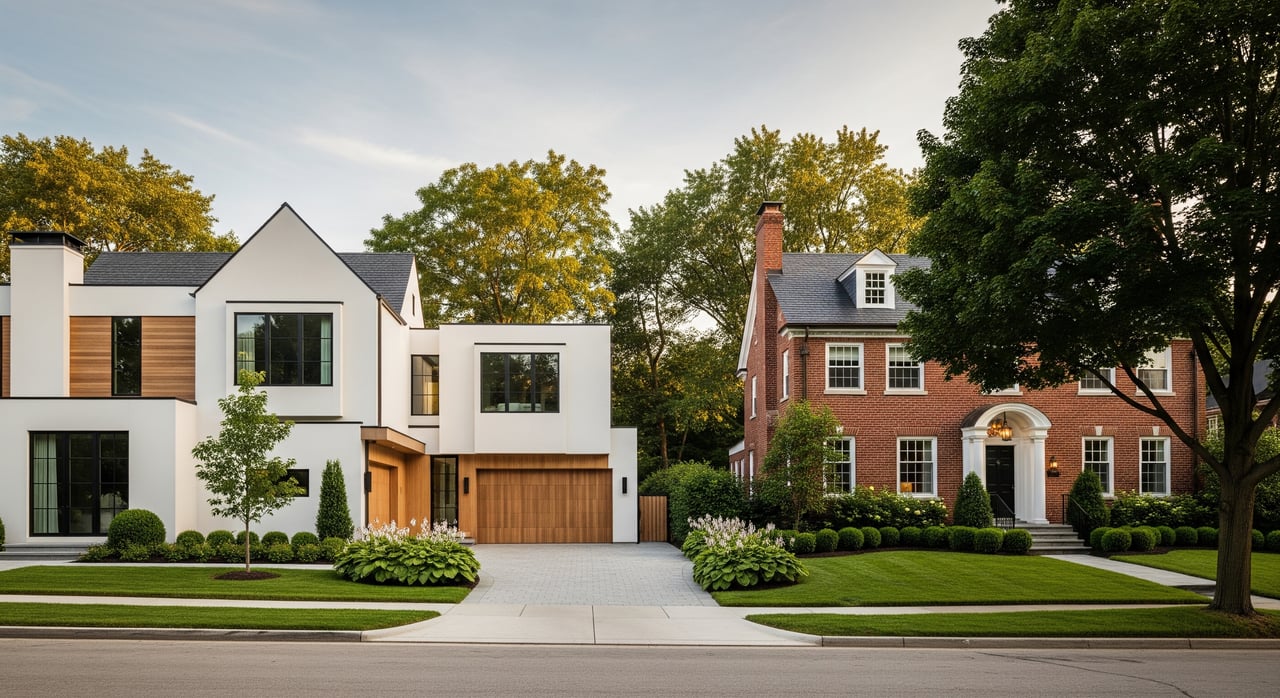
Trying to decide between building a new home or buying an existing one in Okemos, Michigan? Compare costs, timelines, energy efficiency, neighborhoods, HOA considerations, and long-term value to determine which option best fits your lifestyle.
Thinking about building a new home or buying an existing home in Okemos? You're not alone. With limited land, strong demand driven by the area's excellent schools and proximity to Michigan State University, and a mix of established neighborhoods and newer subdivisions, deciding between new construction and resale can feel overwhelming.
One thing I always tell buyers is that there isn't a "better" option—there's only the option that's better for you. Some buyers value customization and energy efficiency, while others prefer mature neighborhoods, established landscaping, and the ability to move sooner. My job is to help you understand the advantages and tradeoffs of each so you can make a confident decision based on your goals, budget, and timeline.
If you're still deciding which Greater Lansing community best fits your lifestyle, I also recommend exploring my Greater Lansing Communities guide to compare neighborhoods, schools, housing styles, and local amenities before narrowing your search.
Okemos Market Snapshot
Okemos sits within Meridian Charter Township and offers a mature housing market made up of both established neighborhoods and newer residential developments. Because much of the township has already been developed, vacant land for custom homes is relatively limited. New construction opportunities are often found within planned subdivisions or as infill projects on remaining parcels.
That combination gives buyers several paths to homeownership, but it also means inventory, lot availability, and pricing can vary significantly depending on which direction you choose.
New Construction vs. Resale at a Glance
Both new construction and resale homes offer excellent opportunities—they simply solve different needs.
New Construction
- Modern floor plans
- Current building codes
- Energy-efficient materials
- Builder warranties
- Personalization opportunities
Existing Homes
- Established neighborhoods
- Mature trees and landscaping
- Larger or more unique lots
- Faster move-in timelines
- Potential room for negotiation
Because of my background in custom home construction, one of the biggest misconceptions I see is buyers assuming all builders offer the same level of quality. They don't. Builders can differ significantly in their construction methods, included features, finish quality, warranty programs, and upgrade options. Looking beyond the model home is one of the most important parts of the decision-making process.
Cost and Financing
Purchase price is only one part of the overall investment.
New Construction
Expect a higher starting price before upgrades. Lot premiums, structural options, and finish selections can increase the final purchase price. Builder incentives may help offset some of these costs, particularly through preferred lenders or closing-cost assistance.
Existing Homes
Resale pricing varies based on location, condition, updates, and recent comparable sales. Homes requiring cosmetic improvements may present opportunities to build equity while negotiating a lower purchase price.
Construction financing also differs from traditional mortgages. Some custom homes require construction loans with draw schedules before converting into permanent financing.
I always encourage buyers to evaluate the total cost of ownership—not simply the purchase price. Monthly utilities, future maintenance, warranties, insurance, and long-term repair costs all contribute to what a home actually costs over time.
If you're planning to build rather than purchase an existing home, understanding how construction financing works is one of the best places to begin.
Lot and Neighborhood Details
The lot itself often becomes one of the biggest differences between new construction and resale.
Older Okemos neighborhoods frequently feature mature trees, varied architecture, and larger lot sizes that developed over many decades. Newer subdivisions generally provide more uniform lots, newer infrastructure, sidewalks, and neighborhood amenities.
Some buyers value privacy and established landscaping.
Others prefer sidewalks, community amenities, and modern neighborhood design.
Neither approach is wrong—it simply depends on how you want to live.
One thing I encourage buyers to think about is how they'll use their outdoor space five or ten years from now. A slightly larger lot, better backyard orientation, or additional privacy may become far more valuable over time than upgraded countertops or flooring.
Many buyers who begin searching for new construction eventually discover that an existing home better fits their timeline, while others decide building offers the customization they're looking for. Comparing both options carefully often leads to the best long-term decision.
Energy Efficiency and Systems
One of the biggest advantages of newer homes is improved efficiency.
Current building codes require better insulation, higher-performing HVAC systems, modern windows, and tighter building envelopes than many older homes. Some builders also include smart-home technology and energy-saving features as standard equipment.
Existing homes can absolutely become energy efficient, but buyers should budget for improvements such as insulation upgrades, replacement windows, or HVAC modernization where appropriate.
Because I spent years working in construction, I enjoy helping buyers evaluate these systems realistically. Sometimes a well-maintained resale home offers outstanding value, while other times new construction provides meaningful long-term savings through improved efficiency and reduced maintenance. Every home deserves to be evaluated individually rather than judged simply by its age.
Maintenance, Warranties, and Immediate Costs
New homes often require less immediate maintenance and typically include builder warranties covering certain components during the first years of ownership. Even so, I still recommend independent inspections because every home—new or old—can have issues that deserve attention.
Resale homes may come with older roofing, mechanical systems, or finishes that eventually require replacement, but many have already benefited from thoughtful updates completed by previous owners.
One of the biggest mistakes buyers make is assuming a brand-new home doesn't need an inspection. In reality, an independent inspector can often identify items that should be corrected before closing or addressed under the builder's warranty, providing valuable peace of mind.
Timelines and Move-In Speed
Your timeline may ultimately determine whether new construction or resale is the better choice.
Existing homes often close within 30 to 45 days once an offer is accepted, assuming financing and inspections proceed as expected. Finished spec homes may offer similar timelines, while production homes built from the ground up often take several months. Fully custom homes may require nine months or longer depending on design, permitting, weather, and builder schedules.
Construction timelines can also shift due to material availability, subcontractor schedules, inspections, and weather conditions.
One thing I always tell buyers is to build flexibility into their timeline whenever possible. While builders work hard to stay on schedule, construction involves many moving parts that aren't always within anyone's control. Having realistic expectations from the beginning helps make the process much less stressful.
HOA Rules and Community Amenities
Homeowners Associations are much more common in newer subdivisions than in older neighborhoods.
New communities often have architectural guidelines, landscaping standards, and monthly dues that help maintain neighborhood appearance and shared amenities. Established neighborhoods may also have HOAs, although they often involve fewer restrictions and lower fees.
Before purchasing any home governed by an HOA, I always recommend reviewing:
- Covenants and restrictions
- HOA bylaws
- Annual budgets
- Reserve studies
- Meeting minutes
- Current dues
- Planned assessments
Understanding these documents early helps eliminate surprises after closing.
Permits, Zoning, and Infrastructure
Whether you're building new or renovating an existing home, local regulations matter.
Meridian Charter Township requires zoning review, building permits, utility permits, and multiple inspections throughout the construction process. Infill projects and tear-downs may also involve setback requirements, floodplain considerations, and additional planning review.
Because of my construction background, I enjoy helping buyers think beyond the floor plan. Utility availability, drainage, setbacks, grading, and future expansion possibilities are all things worth understanding before purchasing a property—not after construction begins.
Taxes, Insurance, and Long-Term Costs
The purchase price is only one part of homeownership.
Property taxes, insurance, utilities, maintenance, HOA dues, and future repairs all contribute to your long-term monthly expenses.
New construction often results in higher assessed values once completed, while resale homes may require more maintenance over time depending on age and condition.
Newer homes may also benefit from lower insurance premiums and reduced utility costs because of updated building materials and mechanical systems.
When comparing two homes, I encourage buyers to evaluate the complete financial picture—not simply the monthly mortgage payment.
A Simple Decision Guide
You may find new construction is the better choice if you:
- Want modern floor plans
- Enjoy personalizing finishes
- Prefer lower maintenance
- Can accommodate a longer timeline
- Value newer building materials and energy efficiency
You may prefer resale if you:
- Need to move sooner
- Appreciate mature neighborhoods
- Want larger lots or established trees
- Prefer seeing the finished home before purchasing
- Like homes with unique architectural character
There isn't one right answer. The best decision is the one that supports your family's lifestyle, financial goals, and long-term plans.
If you're still weighing the pros and cons of building versus buying, my Building Or Buying Your Next Home In St. Johns guide takes a deeper look at how timelines, financing, and customization affect the decision.
How Giguere Estates Helps
One of the things I enjoy most about working with buyers is helping them compare options objectively.
Because I spent more than a decade in custom home construction before becoming a REALTOR®, I understand far more than contracts and negotiations. I help buyers evaluate builders, compare floor plans, understand construction quality, review upgrade options, estimate future maintenance, and determine whether building or buying truly makes the most sense.
Whether you're purchasing your first home, building from the ground up, or relocating to Greater Lansing, understanding your options before making a decision almost always leads to a smoother buying experience.
Final Thoughts
New construction and resale homes both offer incredible opportunities in Okemos.
Some buyers love the personalization, efficiency, and warranties that come with building new.
Others appreciate the charm, mature landscaping, and established neighborhoods found in existing homes.
Neither choice is inherently better.
The right choice is the one that fits your timeline, your budget, your lifestyle, and your future plans.
My role is to help you understand the advantages and tradeoffs of each option so you can make an informed decision—not simply choose the newest or least expensive home.
If you're considering buying or building in Okemos or anywhere throughout Greater Lansing, I'd love the opportunity to help guide you through the process.
Continue Exploring Greater Lansing
If you're comparing new construction, existing homes, or communities throughout Greater Lansing, these additional guides may help:
- Building Or Buying Your Next Home In St. Johns
- Historic Mason Homes Vs. Newer Subdivisions
- Looking For A Single-Family Home For Sale In Greater Lansing, MI?
- Construction Loan Mortgages In Mid-Michigan
- First-Time Homebuyer's Guide To Buying A Home In Greater Lansing
About The Author
Nicole Giguere is a REALTOR® with Giguere Estates, PLLC and a member of the Seguin-Sprague Team at RE/MAX Real Estate Professionals. Before becoming a REALTOR®, Nicole spent more than a decade working in custom home construction, giving her a unique understanding of home design, construction quality, financing, land evaluation, and long-term property value.
Today, she helps buyers and sellers throughout Greater Lansing and Mid-Michigan navigate every stage of the real estate process with confidence. Whether you're purchasing your first home, building a custom home, relocating, or preparing to sell, Nicole is committed to providing honest guidance, local expertise, and a personalized real estate experience from beginning to end.
If you're ready to BUILD • BUY • SELL in Greater Lansing or Mid-Michigan, Nicole would love the opportunity to help.
Nicole Giguere, REALTOR®
Giguere Estates, PLLC | Seguin-Sprague Team
RE/MAX Real Estate Professionals
📍 1755 Abbey Road, East Lansing, MI 48823
📞 (517) 242-0619
BUILD • BUY • SELL